Account Verification (KYC) Guide
Every licensed gambling site requires identity verification. Here's what to expect and how to speed up the process.
What is KYC?
KYC (Know Your Customer) is identity verification required by gambling regulators. Sites must verify you are who you claim to be before processing withdrawals.
Why It Exists
• Prevent underage gambling
• Combat money laundering
• Prevent fraud and multi-accounting
• Regulatory compliance
Legitimate sites have no choice, regulators mandate it.
Documents Typically Required
Proof of Identity
• Passport (preferred)
• Driver's license
• National ID card
Must be current/not expired, clearly readable.
Proof of Address
• Utility bill (electric, gas, water)
• Bank statement
• Tax document
Usually must be dated within 3 months.
Payment Verification
• Photo of credit/debit card (middle digits obscured)
• E-wallet screenshot
• Bank statement showing deposit
Tips for Fast Verification
• Use high-quality photos/scans (no blur)
• Ensure all corners visible
• Match name exactly to account
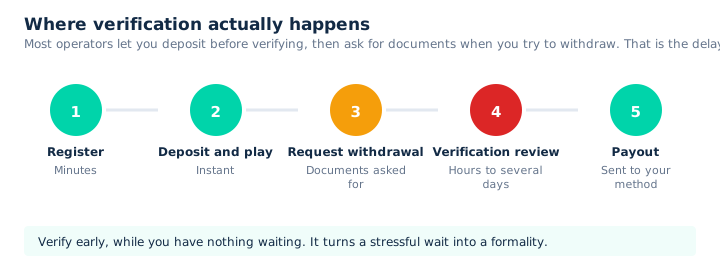
• Submit before requesting first withdrawal
• Respond promptly to requests
Common Issues
• Blurry documents → Retake in good lighting
• Name mismatch → Contact support
• Expired documents → Use current ones
• Address not matching → Update account or explain
How Long Does It Take?
• Automated systems: Minutes to hours
• Manual review: 24-72 hours typical
• Complex cases: Up to a week
UKGC-licensed sites often have stricter/slower processes due to enhanced regulations.
Why KYC Exists
Know Your Customer requirements stem from anti-money laundering (AML) and counter-terrorism financing (CTF) regulations. Gambling companies must verify customer identities to comply with financial crime laws.
Beyond legal compliance, KYC protects both players and casinos. It prevents minors from gambling, stops identity theft, and ensures legitimate winners receive their money while fraudsters are blocked.
The Legal Framework
Different jurisdictions impose different KYC requirements. The UK Gambling Commission mandates identity verification before customers can deposit or withdraw. Malta Gaming Authority allows some play before verification but requires it before significant activity.
EU Anti-Money Laundering Directives set baseline requirements for all EU-licensed operators. These include customer due diligence, ongoing monitoring, and suspicious activity reporting.
Document Requirements in Detail
Identity Documents
Acceptable identity documents typically include passports, national ID cards, and driver's licenses. Documents must be valid (not expired), government-issued, and show your full name, date of birth, and photo.
Some casinos accept digital verification through services like electronic ID checks that verify identity against government databases without requiring document uploads.
Proof of Address
Address verification requires documents showing your name and residential address. Acceptable documents include utility bills (electricity, gas, water), bank statements, government correspondence, or council tax bills.
Documents must be recent, typically within 90 days. Mobile phone bills are sometimes rejected because they don't prove residence as reliably as utility bills.
Source of Funds
For larger deposits or suspicious patterns, casinos may request source of funds documentation. This proves where your gambling money comes from: payslips, bank statements showing salary deposits, investment accounts, property sale documents, or inheritance paperwork.
Source of funds checks intensify regulatory scrutiny on high-volume players. The casino needs confidence you're gambling with legitimate money, not proceeds of crime.
Enhanced Due Diligence
Some players face enhanced due diligence (EDD), more rigorous verification beyond standard KYC. Triggers include high deposit volumes, politically exposed person (PEP) status, high-risk countries, or unusual betting patterns.
EDD might require additional documentation, interviews with the casino's compliance team, or ongoing monitoring of your account activity. This isn't personal. It's regulatory compliance.
Verification Timing Strategies
Verify Early
Submit verification documents immediately after registering, before you deposit significant amounts. This avoids delays when you want to withdraw. Many players hit withdrawal requirements only to face 48-hour verification waits.
Before Large Deposits
Verify before making large deposits. Some casinos freeze accounts that receive substantial deposits without prior verification. Getting verified first prevents access interruptions.
Keep Documents Updated
Casinos may re-verify periodically. Keep current documents ready. If your passport expires, update it promptly, expired documents aren't accepted.
Photography Tips for Documents
Document rejection often stems from poor image quality. Follow these guidelines:
Use good lighting, natural daylight works best. Avoid shadows across documents. Ensure all four corners are visible in the frame. The document should fill most of the image without cutting off edges.
Hold steady or use a flat surface. Blurry images get rejected. Take photos in high resolution. Most smartphone cameras are sufficient if held steady.
For color documents (passports, IDs), color photos are required. Photocopies or screenshots are typically not accepted.
Common Rejection Reasons
Name Mismatches
Your account name must match your ID exactly. If your passport says "William" and you registered as "Bill," verification fails. Similarly, middle names or hyphenated surnames cause issues if not entered consistently.
Address Discrepancies
Your registered address must match your proof of address document. If you've moved, update your account before submitting documents, or submit documents from your current address.
Document Age
Proof of address documents must be recent. A utility bill from 6 months ago will be rejected. Check the specific timeframe requirement (usually 90 days) and submit accordingly.
Image Quality
Blurry, dark, or partially obscured documents get rejected. Retake photos rather than resubmitting the same poor-quality images.
Privacy and Data Security
Gambling companies store verification documents according to data protection regulations. GDPR in Europe requires secure storage, limited access, and eventual deletion of personal data.
Reputable casinos use encrypted transmission and secure storage for sensitive documents. However, you should still be cautious, only submit documents to licensed, reputable operators.
What Happens to Your Documents
After verification, your documents are stored in secure databases. They may be accessed by compliance teams for periodic re-verification, regulatory audits, or suspicious activity investigation.
You have rights under data protection laws to request what data a company holds about you and to request deletion after account closure (subject to regulatory retention requirements).
Dealing with Verification Delays
If verification takes longer than expected, contact customer support. Ask for specific feedback on what's causing delays. Sometimes a simple document resubmission resolves issues.
Escalate through formal complaint processes if delays seem unreasonable. Licensed casinos have obligations to process verification within reasonable timeframes.
KYC for Different Account Types
Recreational Players
Low-volume recreational players face standard KYC, identity and address verification before first withdrawal.
High-Volume Players
Players depositing or wagering large amounts face enhanced scrutiny. Expect source of funds requests and potentially ongoing verification as activity levels change.
VIP/High Roller
VIP players often receive dedicated verification support. Despite large deposits, verification should be smoother, casinos prioritize high-value customers. However, compliance requirements remain equally rigorous.
International KYC Differences
Different jurisdictions impose varying KYC intensity. UK-licensed casinos under the UKGC often require verification before any gambling. MGA-licensed sites may allow limited play before verification.
Asian-facing casinos may have different documentation requirements. Always check specific casino requirements for your jurisdiction before registering.
Digital Identity Verification
Many casinos now use electronic identity verification services that check your details against government databases instantly. This can eliminate the need for document uploads entirely in some cases.
Electronic verification is faster and more convenient when available. However, it requires your details to match database records exactly, any discrepancies fall back to manual verification.
Biometric Verification
Some casinos implement facial recognition or liveness checks. You may be asked to take a selfie matching your ID photo or record a short video following instructions.
Biometric verification reduces fraud but raises privacy considerations. Understand what data is collected and how it's stored before consenting to biometric checks.
Appeals and Disputes
If verification is rejected unfairly, you have appeal rights. Contact customer support first. If unsatisfied, escalate to the casino's complaints department. Licensed casinos must provide dispute resolution processes.
As a last resort, regulatory bodies (like the UKGC) accept complaints about verification practices. Document all communications for potential escalation.
Future of KYC Verification
KYC technology continues evolving. Electronic identity verification, biometric authentication, and blockchain-based identity systems may streamline future verification. However, regulatory requirements ensure some verification will always be necessary.
Stay informed about verification developments at your preferred casinos. New methods may simplify the process while maintaining security standards.
Multiple Account Considerations
KYC links your identity to your account, preventing multiple accounts. Using fake documents or identities is fraud and results in account closure and forfeited funds. Always provide genuine documentation.
Post-Verification Considerations
After verification completes, your account operates normally. Future withdrawals process without repeating full verification unless circumstances change significantly or regulatory requirements trigger re-verification.
KYC Best Practices Summary
Submit high-quality documents early in your casino relationship. Ensure all information matches across your account and documents. Respond promptly to verification requests. Keep documents current and accessible for re-verification.
Understanding KYC as protective rather than obstructive improves the experience. These processes exist to protect you and ensure fair, legal gambling environments.