Payment Methods Compared
Cards, e-wallets, crypto, bank transfers, each has trade-offs. Finding the right method for your needs.
Credit/Debit Cards
Visa, Mastercard
Pros: Universal acceptance, instant deposits, familiar
Cons: Some banks block gambling transactions, withdrawals take 2-5 days, credit cards banned in UK
Note: UK banned credit card gambling in 2020. Debit cards still work.
E-Wallets
PayPal, Skrill, Neteller
Pros: Fast withdrawals (0-24h), layer of privacy from bank, widely accepted
Cons: Often excluded from bonuses, Skrill/Neteller fees on inactive accounts
PayPal has best reputation but limited gambling site availability.
Cryptocurrency
Bitcoin, Ethereum, Litecoin, USDT
Pros: Fastest withdrawals (instant to minutes), privacy, no bank involvement, often higher limits
Cons: Price volatility (unless using stablecoins), learning curve, irreversible transactions
Best for: Privacy-focused players, international players, high-volume
Bank Transfer
Pros: High limits, direct bank connection
Cons: Slowest method (3-7 days), gambling transactions visible on statements
Prepaid Cards
Paysafecard
Pros: No bank/card needed, anonymous deposits, budget control
Cons: Cannot withdraw to Paysafecard, need alternative for cashouts
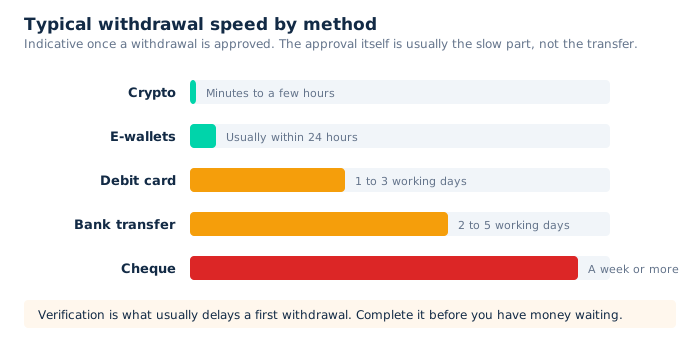
Speed Comparison
Deposits: All instant except bank transfer (1-3 days)
Withdrawals:
• Crypto: Minutes
• E-wallets: 0-24 hours
• Cards: 1-5 days
• Bank: 3-7 days
Our Recommendation
Have multiple options available. E-wallet (PayPal if available, otherwise Skrill) for general use. Crypto if you want faster withdrawals and privacy. Avoid bank transfers unless necessary for high amounts.
Understanding Payment Processing
Gambling payments involve multiple parties: you, your payment provider, the gambling site's payment processor, and the gambling site itself. Each party adds potential delays, fees, or failure points.
Deposits are typically instant because the gambling site bears the risk, if your payment later fails or reverses, they pursue collection. Withdrawals take longer because the site verifies legitimacy before releasing funds permanently.
Credit Cards and Gambling
Many jurisdictions have restricted or banned credit card gambling. The UK banned it in April 2020 to prevent problem gambling fueled by borrowing. Australia, some US states, and other jurisdictions have similar restrictions.
Where credit cards remain legal for gambling, card issuers may still decline transactions. Major banks increasingly view gambling as high-risk and may block transactions or close accounts with heavy gambling activity.
Debit cards face fewer restrictions but still may be declined by some banks. Your bank statement will show the gambling merchant name, which affects privacy and potentially mortgage or loan applications.
E-Wallet Deep Dive
PayPal
PayPal is the most trusted e-wallet but has selective gambling site acceptance. They only work with licensed operators in regulated markets. PayPal offers buyer protection on regular purchases but not gambling transactions.
PayPal withdrawals typically complete within 24 hours. The service is free for standard transactions in most countries. Their reputation for consumer protection makes them preferred where available.
Skrill
Skrill (formerly Moneybookers) specializes in gambling payments. Nearly all gambling sites accept Skrill. They offer a prepaid Mastercard for spending your balance.
Fees include currency conversion charges (3.99%) and inactive account fees (€3/month after 12 months without login). Skrill withdrawals are fast, usually same-day or next-day processing.
Neteller
Neteller operates similarly to Skrill (both owned by Paysafe Group). Widespread gambling acceptance, prepaid card option, and fast processing. Fee structure mirrors Skrill including inactivity fees.
Neteller and Skrill deposits are often excluded from bonuses because the sites have lower fraud rates and chargebacks from these methods: the bonus exclusion compensates for reduced risk.
ecoPayz and MuchBetter
Newer e-wallets targeting gambling specifically. ecoPayz offers good international coverage. MuchBetter is mobile-focused with a sleek app and competitive fees. Both offer prepaid cards.
Cryptocurrency Gambling
Bitcoin (BTC)
Bitcoin was the first cryptocurrency accepted by gambling sites and remains the most widely accepted. Transactions typically confirm in 10-60 minutes. Network fees vary with congestion, sometimes pennies, sometimes $20+.
Bitcoin's price volatility means your deposit value changes after depositing. Some sites convert to fiat immediately; others let you hold BTC and experience gains or losses.
Ethereum (ETH)
Ethereum offers faster confirmation times than Bitcoin (typically under 5 minutes). Network fees ("gas") can be high during congestion but are generally competitive with Bitcoin.
Litecoin (LTC)
Litecoin processes transactions faster and cheaper than Bitcoin. Many crypto gambling sites accept it as an alternative for players wanting lower fees.
Stablecoins (USDT, USDC)
Stablecoins are pegged to fiat currencies, eliminating volatility concerns. USDT (Tether) is most common at gambling sites. You get crypto speed without price fluctuation risk.
Stablecoin deposits are increasingly popular for high-volume players who want fast transactions without exposure to crypto price swings.
Prepaid Options
Paysafecard
Paysafecard lets you buy vouchers with cash and deposit using PIN codes. Completely anonymous deposits with no bank or card linkage. Available at retail locations across Europe and beyond.
Major limitation: you cannot withdraw to Paysafecard. You need another method for cashouts. This makes it suitable for deposit-only budgeting but requires payment method mixing.
AstroPay
AstroPay is popular in Latin America, offering prepaid cards and wallet functionality. It bridges banking limitations in regions with restricted gambling payment processing.
Fees and Limits
Most gambling sites don't charge deposit fees, but payment providers often do. Skrill and Neteller charge for currency conversion. Crypto networks charge transaction fees. Bank transfers may incur wire fees.
Withdrawal fees vary by site and method. Some sites offer free withdrawals; others charge $20-50 for bank transfers. Check fee schedules before committing to a site.
Deposit limits often increase with account age and verification level. Minimum deposits typically range from $10-20. Maximum deposits vary widely, e-wallets often cap at $5,000-10,000 per transaction; bank transfers handle larger amounts.
Security Considerations
Two-factor authentication should be enabled on any payment account holding significant funds. E-wallets, crypto wallets, and banking apps all offer 2FA, use it.
Crypto transactions are irreversible. Triple-check wallet addresses before sending. Sending to wrong addresses means permanent loss with no recourse.
E-wallet accounts can be hacked if credentials are compromised. Use unique, strong passwords and enable all available security features.
Regional Availability
Payment method availability varies significantly by country. PayPal gambling is available in UK and parts of Europe but not US. Crypto gambling operates in gray areas in many jurisdictions.
Research which methods work in your location before creating gambling accounts. Having to switch payment methods mid-use creates complications and may trigger additional verification requirements.
Withdrawal Verification
First withdrawals trigger KYC (Know Your Customer) verification at all licensed sites. Have documents ready: government ID, proof of address, and potentially payment method verification.
Withdrawing to the same method used for deposits is often required or strongly preferred. This is anti-money-laundering compliance, not casino obstruction.
Choosing the Right Method for Your Needs
Your ideal payment method depends on priorities. Speed-focused players should use e-wallets or cryptocurrency. Privacy-conscious players benefit from crypto or prepaid options. High-volume players need methods with adequate limits like bank transfers.
Consider both deposit and withdrawal needs. Some methods work well for deposits but poorly for withdrawals. Having separate optimal methods for each direction may be necessary.
Troubleshooting Common Payment Issues
Declined Deposits
Bank-declined gambling transactions are increasingly common. Contact your bank to authorize gambling payments, use alternative methods like e-wallets, or consider crypto which bypasses traditional banking entirely.
Slow Withdrawals
If withdrawals take longer than stated, check verification status first, pending KYC delays all cashouts. Contact support with your withdrawal reference. Document all communication for potential escalation.
Payment Method Unavailable
Methods become unavailable due to regional restrictions, provider policy changes, or account issues. Always maintain backup payment options to avoid being unable to access funds.
Future Payment Trends
Open Banking integration is expanding, enabling direct bank connections without traditional payment processors. Instant bank transfers are becoming standard in regulated markets.
Cryptocurrency adoption continues growing, with more casinos accepting multiple coins and stablecoins becoming preferred for volatility-averse players.
Mobile payment integration (Apple Pay, Google Pay) is expanding where regulations permit, offering convenient deposit options with existing wallet setups.
Payment Method Recommendations by Player Type
Casual Players
Debit cards or PayPal offer simplicity without learning new systems. Familiar interfaces and consumer protections suit occasional gambling.
Regular Players
E-wallets like Skrill or Neteller provide fast withdrawals and separate gambling activity from main banking. Worth the setup effort for frequent play.
High-Volume Players
Cryptocurrency offers the highest limits, fastest processing, and privacy from banking institutions. Bank transfers supplement for very large transactions.
Privacy-Focused Players
Cryptocurrency combined with prepaid deposits maximizes privacy. No direct link between gambling activity and traditional financial accounts.
Responsible Banking Practices
Separating gambling funds from essential expenses protects your financial health. Dedicated e-wallets or gambling-specific bank accounts prevent overspending and simplify tracking.
Never gamble with money needed for rent, bills, or necessities. Payment methods that enforce this separation, like prepaid cards loaded with discretionary funds, support responsible gambling naturally.
International Payment Considerations
Cross-border gambling introduces currency conversion costs. Converting USD to EUR and back costs 2-5% depending on method. Casinos accepting your home currency eliminate these fees.
Cryptocurrency operates globally without conversion fees, making it attractive for international players. However, exchange rate volatility between crypto and fiat currencies creates its own risks.
Security Best Practices
Always verify you are on the correct casino domain before entering payment details. Use unique passwords for gambling accounts. Enable two-factor authentication where available. Monitor statements for unauthorized transactions.
Comparing Payment Options
Create a comparison based on your priorities. Speed matters for active players. Fees affect high-volume transactions. Privacy concerns favor crypto. Balance these factors against your actual usage patterns.
Final Payment Recommendations
Test your preferred payment method with a small transaction before committing larger amounts. Verify withdrawal processing works as expected before building significant balances.
Payment Method Summary
No single payment method suits everyone. Evaluate your priorities, speed, privacy, limits, fees, and choose accordingly. Maintain multiple options for flexibility when circumstances change.
Verify payment method availability before registering at new casinos. Having your preferred method unavailable after depositing creates complications and potential verification delays.