Poker Positions Explained
Why the seat you sit in decides how much a hand is worth. The positions, why acting last wins, and how to play each one.
What Position Means
Position is your seat relative to the dealer button, and it decides the order you act in on every betting round after the flop. The later you act, the more information you have, because you've already seen what everyone before you did. That single advantage, acting with more information, is why position is one of the most important concepts in poker.
The Positions
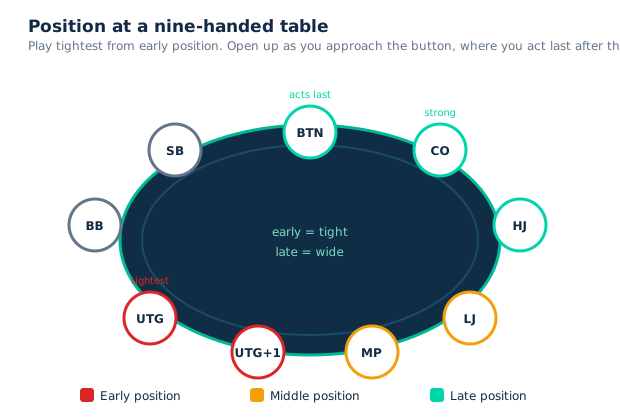
Moving around from the button, the seats are usually grouped like this:
- The button: the best seat. You act last on every postflop round.
- Cutoff and hijack (late position): just before the button, strong seats for opening a wide range and stealing blinds.
- Middle position: a moderate range, cautious against the players still to act behind you.
- Under the gun (early position): first to act preflop and out of position after, so you need the tightest range here.
- Small and big blinds: you've posted money, but you act first after the flop, which makes the blinds tricky to play well.
Why Position Matters
Acting last lets you control the size of the pot, bluff more effectively, and get more value from strong hands, because you see your opponents act first. Out of position, you're guessing, and you'll often check to a player who then checks behind, giving up value, or bets and puts you to a tough decision. The same hand is worth more in position than out of it.
Playing by Position
The practical rule is simple: play tight in early position and open up as you get closer to the button. From the cutoff and button you can raise a wide range and attack the blinds. From under the gun, stick to strong hands. In the blinds, be selective, because you'll be out of position for the rest of the hand.
If you fix one leak, make it this: play fewer hands early and more hands on the button. Position is free money that most losing players give away by playing the same range from every seat.
Quick Tips
- Raise more hands from late position, fewer from early.
- Attack players who fold their blinds too often.
- Be cautious calling raises out of position, even with decent hands.
- When in doubt, having position is a reason to play a hand, and being out of position is a reason to fold it.