Betting Exchanges Explained
Learn how betting exchanges work and why they often offer better odds than traditional bookmakers.
What is a Betting Exchange?
A betting exchange is a platform where bettors bet against each other, not against a bookmaker. The exchange takes a small commission on winning bets (usually 2-5%) instead of building a margin into the odds.
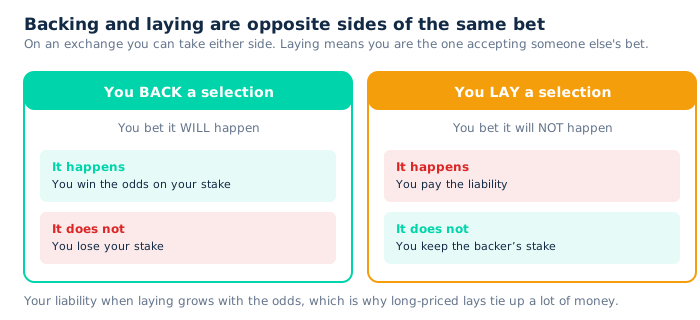
Back vs Lay Betting
Exchanges offer two types of bets:
- Back bet: Betting FOR an outcome (like a traditional bet). You win if the selection wins.
- Lay bet: Betting AGAINST an outcome. You win if the selection loses. You're essentially acting as the bookmaker.
Why Use an Exchange?
Better Odds
Without a bookmaker's margin, exchange odds are typically 10-20% better. A 2.00 price at a bookmaker might be 2.10 on an exchange.
Lay Betting
You can bet against outcomes. Think a favorite won't win? Lay them. This opens up entirely new strategies.
Trading
You can back at one price and lay at another to lock in profit regardless of outcome - similar to trading stocks.
Popular Betting Exchanges
 The largest, most liquid exchange with the best odds
 Lower commission (2%), clean interface
 Good liquidity on major events
 Low commission, US sports focus
Understanding Liquidity
Liquidity is how much money is available at each price. High liquidity = you can get your bet matched easily. Popular markets have excellent liquidity; obscure markets may not.
Commission Structure
Exchanges charge commission on net winnings:
- Betfair: 5% (can reduce to 2% with volume)
- Smarkets: 2%
- Betdaq: 2%
When to Use Exchanges vs Bookmakers
Use exchanges when:
- You want the best possible odds
- You want to lay (bet against) an outcome
- You want to trade positions
- The market has good liquidity
Use bookmakers when:
- You want promotions and bonuses
- The exchange lacks liquidity
- You want special bets (accumulators, bet builders)
Understanding Lay Liability
When you lay a bet, you risk more than your potential profit. Your liability equals the backer's potential winnings. If someone backs a horse at 5.0 with £10, you win their £10 stake if the horse loses, but you owe £40 (the profit they would have made) if it wins.
Calculate lay liability with: Liability = (Lay Odds - 1) × Stake. At odds of 3.0 laying £20, your liability is (3.0 - 1) × £20 = £40. This £40 is held by the exchange until the bet settles.
Trading on Exchanges
Trading means backing at one price and laying at another to guarantee profit regardless of outcome. This is possible because odds change as new information arrives or as event time approaches.
Example: You back Team A at 3.0 with £100 (potential profit £200). Later, Team A's odds shorten to 2.0. You lay Team A at 2.0 with £150. If Team A wins: your back bet wins £200, your lay bet loses £150, net profit £50. If Team A loses: your back bet loses £100, your lay bet wins £150, net profit £50.
This "greening up" technique locks in profit regardless of outcome. Professional traders do this constantly during live events, profiting from odds movements rather than event outcomes.
In-Play Exchange Trading
Live betting creates dramatic odds movements that traders exploit. A goal in football might shift match odds from 2.0 to 1.3 instantly. Traders positioned correctly capture these movements.
In-play trading requires fast reactions, understanding of how events affect odds, and discipline to cut losing positions quickly. Software tools help automate trading, but the core skill is reading how games unfold.
The exchange delays bets by a few seconds during live events to prevent exploitation of broadcast delays. This "bet delay" affects trading strategy. You can't react to goals you just saw if others saw them seconds earlier.
Matched Betting with Exchanges
Exchanges enable matched betting, extracting value from bookmaker free bets by covering all outcomes. Back the selection at a bookmaker using their free bet; lay the same selection on an exchange. You lose a small amount to the exchange commission but guarantee extracting most of the free bet value.
This strategy works because exchanges allow laying, which bookmakers don't offer. Combined with sign-up bonuses and ongoing promotions, matched betting can extract significant value with minimal risk.
Arbitrage Opportunities
When exchange odds differ significantly from bookmaker odds, arbitrage opportunities arise. Back at the bookmaker, lay on the exchange, and profit regardless of outcome. These opportunities are rare, small, and disappear quickly, but they exist.
Arbitrage between exchanges and bookmakers carries risk: account restrictions at bookmakers who identify arb bettors. However, the exchange itself never restricts winning customers, making it the preferred side of any arb position.
Exchange Strategies for Different Sports
Football Trading
Football's low-scoring nature creates predictable odds movements. Backing draws at kick-off and trading out if the game remains goalless, odds shorten as time passes without goals, is a popular strategy. Goals create instant opportunities as odds shift dramatically.
Horse Racing
Horse racing offers massive liquidity on major races. Odds movements in the minutes before races reflect late market information. Many traders focus purely on pre-race markets, exiting before horses even run.
Tennis
Tennis trading follows momentum closely. Service breaks create immediate odds movements. Understanding player tendencies, who holds serve consistently, who breaks back well, enables profitable trading during matches.
Commission Optimization
Exchange commission significantly affects profitability. Betfair's base 5% drops with volume; Smarkets offers flat 2%. For active traders, lower commission compounds into substantial savings.
Calculate effective odds including commission. A winning bet at 2.0 with 5% commission returns 1.95 (you keep 95% of profit). Factor this into every value calculation and trading decision.
Account Management
Unlike bookmakers, exchanges don't restrict winning customers. Your ability to bet isn't limited by success. This makes exchanges essential for anyone attempting serious long-term betting profit.
However, exchanges require more capital than equivalent bookmaker betting. Lay liability ties up funds; trading requires maintaining positions. Adequate bankroll management becomes even more critical.
Exchange Limitations
Liquidity varies dramatically. Premier League matches have millions available; lower leagues may have minimal liquidity. Check available money before planning bets, advertised odds mean nothing if you can't get matched.
Exotic markets rarely exist on exchanges. Bet builders, complex accumulators, and niche props remain bookmaker territory. Exchanges focus on main markets where peer-to-peer matching works efficiently.
Getting Started with Exchanges
Start by observing markets without betting. Watch how odds move during events, understand the interface, practice calculating liability. Paper trade before risking real money.
Begin with simple back bets on liquid markets. As you understand the platform, introduce lay bets. Only attempt trading after mastering both backing and laying individually. The learning curve is steeper than traditional betting, but the advantages justify the effort.
Exchange Betting Psychology
Exchange betting changes psychological dynamics. Being both potential backer and layer shifts perspective. You see markets from both sides. This dual view often improves pricing assessment compared to one-sided bookmaker betting.
Lay betting feels counterintuitive initially. Betting against outcomes requires mental adjustment. Practice with small stakes until laying becomes as natural as backing.
Exchange Markets vs Bookmaker Markets
Not every bookmaker market exists on exchanges. Prop bets, exotic accumulators, and many in-play markets lack exchange equivalents. Your betting strategy may need to incorporate both platforms depending on your interests.
Exchange pricing represents true market consensus. When exchange and bookmaker prices diverge significantly, analyze why. The exchange isn't always "right", liquidity limitations and timing differences create apparent but not real discrepancies.
Long-Term Exchange Strategy
Regular exchange bettors develop sophisticated approaches over time. Some focus purely on pre-event value betting with exchange prices as reference. Others trade actively, treating betting like financial market speculation.
Neither approach is inherently superior. Match your strategy to your personality, available time, and risk tolerance. Consistent execution matters more than strategy choice.
Exchange Betting Risks
While exchanges offer advantages, risks exist. Unmatched bets leave you exposed, always verify bets are matched before assuming position security. Exchange company risk, while low with major platforms, exists theoretically.
Lay betting creates liability that must be funded. Ensure adequate account balance before placing lay bets. Running out of funds mid-position creates forced exits at unfavorable prices.
Choosing Between Exchanges
Betfair dominates liquidity but charges higher commission. Smarkets offers lower commission with good liquidity on popular markets. Betdaq and others provide alternatives for specific situations.
Many serious bettors maintain accounts at multiple exchanges, accessing the best prices for each situation. The effort of multiple accounts pays off through improved execution.
The Exchange Betting Future
Exchange betting continues evolving. New entrants challenge established players. Cryptocurrency exchanges explore betting applications. Regulatory changes affect market access and structure.
For bettors committed to long-term improvement, understanding exchange dynamics provides foundation for adapting to whatever the future brings. The core concepts, peer-to-peer betting, back/lay mechanics, trading opportunities, will persist even as specific platforms evolve.
Key Takeaways
Exchanges enable both backing and laying bets with typically lower margins than bookmakers. Understanding lay liability, commission structures, and liquidity dynamics is essential. Professional bettors consider exchange access fundamental to serious betting approaches.
The skills developed through exchange use, understanding market mechanics, reading odds movements, calculating liability, benefit all betting approaches regardless of whether you ultimately focus on exchange or bookmaker betting.