Horse Racing Betting Guide
The original betting sport with unique markets, terminology, and traditions. Here's how it works.
Basic Bet Types
Win
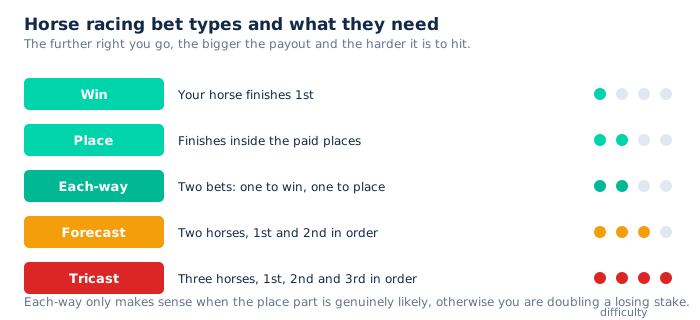
Your horse must finish first. Simple but risky, only one horse wins.
Place
Your horse must finish in the top 2, 3, or 4 (depending on field size). Lower odds but higher chance.
Each-Way
Two bets in one: half stake on Win, half on Place. If your horse wins, both bets pay. If it places but doesn't win, you get the place portion.
Place odds are typically 1/4 or 1/5 of the win odds depending on race type and field size.
Forecast
Pick the first two finishers in exact order. Difficult but high-paying.
Tricast
Pick the first three finishers in exact order. Even more difficult, even higher odds.
Reading Form
Form guides show recent results: 1234 means 1st, 2nd, 3rd, 4th in last four races. Also shows course and distance form, going preference (soft/firm ground), trainer/jockey stats.
Key Factors
• Going (ground conditions)
• Distance suitability
• Course experience
• Trainer/jockey form
• Draw position (flat racing)
• Weight carried (handicaps)
Best Odds Guaranteed
Most bookmakers offer "Best Odds Guaranteed" on UK/Irish racing. If you take early odds and the SP (starting price) is higher, you get paid at the higher price. Always worth taking.
Understanding the Form Guide
Form guides contain dense information in abbreviated format. Recent finishing positions appear as numbers (1-9) or letters (0 for 10th+, F for fell, U for unseated, P for pulled up). Reading left to right shows most recent to oldest.
Course and distance indicators (C and D) highlight horses that have won at today's track or today's distance. These are significant factors, some horses perform markedly better at specific courses or distances.
Days since last run matters. Fresh horses (7-28 days) often perform better than those running frequently or returning from long layoffs. However, some trainers excel at bringing horses back from breaks.
Going (Ground Conditions)
Going describes the ground surface, ranging from Heavy (very soft, wet) through Soft, Good to Soft, Good, Good to Firm, to Firm (hard, dry). Some horses prefer "cut in the ground" (softer conditions); others need faster surfaces.
Going affects race pace and stamina requirements. Heavy ground saps energy, favoring strong stayers. Firm ground enables faster times, suiting speedier types. Check each horse's record on today's going.
Handicaps vs Non-Handicaps
Handicap races assign different weights to equalize chances, better horses carry more weight. This creates competitive betting heats where any runner can theoretically win.
Non-handicaps include maidens (horses yet to win), conditions races, and Group/Graded races. Class differences are more apparent; favorites win more frequently but at shorter odds.
Flat Racing vs National Hunt
Flat racing features no obstacles over various distances from 5 furlongs to 2+ miles. Speed is paramount at shorter trips; stamina dominates longer races. The flat season runs primarily April-October in the UK.
National Hunt (jumps) racing includes hurdles (smaller obstacles) and steeplechases (larger fences). Falls and unseating add unpredictability. Stamina and jumping ability matter more than raw speed. Winter is the peak jumps season.
Draw Bias
On flat tracks, starting position (draw) affects chances significantly on some courses. At Chester, low draws dominate on the tight track. At Beverley, high draws often advantage. Research course draw statistics before betting.
Draw bias depends on going and race distance. Soft ground sometimes negates typical biases. Sprint races show stronger draw effects than longer trips where horses have time to find position.
Trainer and Jockey Analysis
Trainer form indicates stable confidence. A trainer sending multiple runners to a meeting likely has them well-prepared. First-time equipment changes (blinkers, tongue-tie) often signal improvement attempts.
Jockey bookings reveal information. Top jockeys choosing between stable runners often pick the better chance. Retained jockeys switching to different trainers' horses mid-meeting suggests the retained mount is less fancied.
Betting Market Movements
Significant market moves often reflect informed money. A horse drifting from 4/1 to 8/1 suggests connections are less confident. Shortening from 10/1 to 5/1 indicates money from those who know the horse.
Late money is particularly significant, punters with genuine information often wait until close to race time. However, public enthusiasm for well-known horses can create false steam.
Each-Way Value
Each-way betting offers value in specific situations. Large fields with clear favorites create each-way opportunities for outsiders who can place. Handicaps with bunched runners suit each-way approaches.
To see exactly what an each-way bet pays if your selection wins, places, or just misses out, run the numbers through our each-way calculator.
Calculate each-way value by comparing place odds to win odds. If place terms are generous (1/4 odds for 4 places in 16+ runner handicaps), backing an outsider each-way can be +EV even if win chances are slim.
Ante-Post Betting
Ante-post bets are placed days or weeks before races, offering better odds but with non-runner risk, if your horse withdraws, you lose your stake. Major festivals like Cheltenham attract significant ante-post betting.
Ante-post value exists because bookmakers can't perfectly price uncertain future events. Weather changes, injuries, and supplementary entries all affect actual race competitiveness. Accept non-runner risk only when odds compensate sufficiently.
Exchange Trading on Racing
On a betting exchange you can lay a horse, betting on it to lose, as well as back it to win. Horse racing offers excellent exchange liquidity, especially on UK racing. Pre-race markets see significant price movements as information emerges. Many traders focus purely on the final minutes before races.
In-running trading requires fast reactions and understanding how races unfold. Leaders often shorten dramatically before fading; closers may lengthen before rallying. Position in running creates trading opportunities.
System Betting in Racing
Racing systems attempt to find repeatable profitable patterns: backing all horses from certain trainers, following specific jockeys, or backing horses dropping in class. Most systems fail long-term as bookmakers adjust.
If you discover a genuine edge, exploit it quietly. Publicized systems attract enough betting volume to eliminate the edge through odds adjustments.
Major Festivals and Events
Cheltenham Festival, Grand National meeting, Royal Ascot, and the Derby represent peak racing betting. Bookmakers offer enhanced promotions but market efficiency increases as more analysis focuses on these events.
Festival betting requires early preparation. Ante-post markets open months ahead; waiting until race week often means poorer value as obvious contenders shorten.
Responsible Racing Betting
Racing's fast pace, multiple meetings daily with races every 15-30 minutes, creates opportunities for impulsive betting. Set daily limits before starting and stick to them regardless of results.
The randomness inherent in racing means losing runs are inevitable. Even excellent judges of form experience extended poor spells. Adequate bankroll management and realistic expectations prevent chasing behavior.
Building Horse Racing Knowledge
Racing knowledge compounds over time. Following specific trainers, jockeys, and horses builds intuition that supplements form analysis. Understanding why certain combinations perform well creates future betting opportunities.
Study race replays to understand how races develop. Why did the winner win? Was it class, luck, tactics? Understanding race dynamics improves future assessments.
Technology and Racing Data
Modern racing analysis incorporates sectional timing, speed figures, and detailed form databases. Services like Timeform, Racing Post, and others provide deep data for serious analysis.
Some bettors develop quantitative models rating horses numerically. Others rely on traditional form study enhanced by video analysis. Both approaches can succeed when applied consistently with appropriate bankroll management.
The Racing Calendar
Understanding the racing calendar helps identify patterns. Early-season handicaps differ from late-season conditions races. Festival preparation affects form trajectories. Seasonal ground changes favor different horse types.
Planning betting activity around the calendar, focusing on periods where your edge is strongest, improves overall performance versus betting randomly throughout the year.
Horse Racing Betting Bankroll
Racing's high variance requires conservative bankroll management. A 20% strike rate at average odds of 6.0 generates long losing runs regularly. Ensure your bankroll survives inevitable downturns.
Many racing bettors use level stakes rather than proportional staking. This simplifies management but may not optimize returns. Consider your approach carefully based on your edge certainty and risk tolerance.
Racing and Responsible Gambling
Racing's continuous availability, multiple meetings daily, year-round, creates particular responsible gambling challenges. The "next race" always offers opportunity to chase losses or maintain action.
Set firm daily limits before starting. Take complete days off regularly. If racing betting affects your mood, relationships, or finances negatively, seek support immediately.
Key Takeaways
Racing offers extensive markets from simple win bets to complex forecasts and system bets. Form analysis, going assessment, and understanding draw bias matter. High variance demands conservative bankroll management regardless of perceived skill level.
The depth of racing analysis creates lifelong learning opportunity for genuinely interested participants. Whether as entertainment or profit pursuit, racing rewards sustained engagement.