Casino Bonuses Explained
Casino bonuses come with wagering requirements that determine their real value. Learn to read the terms, calculate expected value, and decide whether a bonus is worth claiming.
Last updated: 2026
Casino bonuses look generous: "100% match up to £500!" "50 free spins!" But behind every headline number are terms designed to ensure most players never withdraw bonus money. Understanding these terms is essential before accepting any bonus.
Types of Casino Bonuses
Welcome/Deposit Bonuses
The most common type. You deposit money, the casino "matches" a percentage. A 100% match up to £200 means if you deposit £200, you get £200 in bonus funds. You now have £400 to play with, but only £200 is real money.
No Deposit Bonuses
Free money or spins just for signing up, no deposit required. Sounds ideal, but these come with the most restrictive terms. Wagering requirements are typically very high, and maximum withdrawals are often capped at tiny amounts.
Free Spins
Free plays on specific slot games. Winnings from free spins are usually credited as bonus funds with their own wagering requirements, not as withdrawable cash.
Reload Bonuses
Smaller bonuses for existing players making additional deposits. Usually less generous than welcome offers but may have better terms.
Cashback
A percentage of losses returned. Often the most straightforward bonus type, if you lose £100 and get 10% cashback, you receive £10. Check whether cashback is paid as cash or bonus funds.
Wagering Requirements: The Core Issue
Wagering requirements (also called playthrough requirements) determine how much you must bet before bonus funds become withdrawable. This is where most bonuses become unviable.
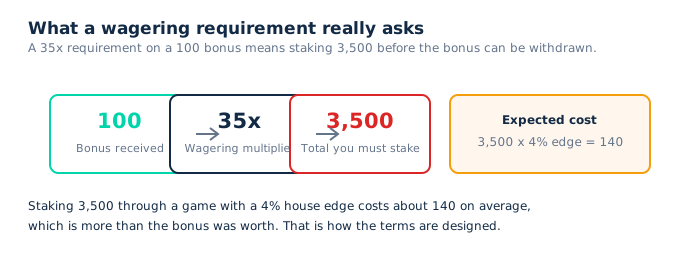
Example: You receive a £100 bonus with 40x wagering. You must place £4,000 in total bets before you can withdraw any bonus-derived winnings.
Given the house edge, most of that £4,000 will be lost during wagering. The math is stark:
The Math of Wagering Requirements
Assuming you play slots with a 4% house edge:
- £100 bonus with 40x wagering = £4,000 in bets required
- Expected loss during wagering: £4,000 × 4% = £160
- You're statistically expected to lose more than the bonus is worth
Lower wagering requirements (20-25x) can be viable. Higher requirements (50x+) rarely are.
Game Restrictions
Not all games contribute equally to wagering requirements. Typically:
- Slots: 100% contribution
- Table games: 10-20% contribution (sometimes 0%)
- Live casino: Usually 0-10% contribution
- Specific excluded games: 0% contribution
This matters because table games like blackjack have lower house edges. Casinos restrict them to prevent you from playing through requirements with minimal losses. You're essentially forced onto higher-edge slots.
Maximum Bet Limits
While a bonus is active, most casinos impose maximum bet limits, often £5 per spin. Exceeding this limit, even accidentally, can void your bonus and any winnings.
This restriction prevents betting strategies that could help clear wagering requirements faster. It also means you can't make larger bets when you feel lucky: a subtle but important limitation.
Time Limits
Bonuses expire. Common timeframes are 7, 14, or 30 days. If you haven't met wagering requirements by the deadline, the bonus and any associated winnings are forfeit.
This creates pressure to play more than you might otherwise choose to. If you're behind on wagering with days remaining, the temptation to play aggressively increases, exactly what the casino wants.
Maximum Win/Withdrawal Caps
Some bonuses cap what you can withdraw, regardless of how much you win. A no-deposit bonus might limit withdrawals to £50 or £100, even if you hit a £1,000 jackpot.
Always check for these caps before playing. Winning big only to discover you can keep a fraction is a particularly frustrating experience.
Other Terms to Watch
Deposit + Bonus Wagering
Some casinos apply wagering requirements to your deposit as well as the bonus. A 100% match with 30x wagering on deposit + bonus means a £100 deposit and £100 bonus requires £6,000 in bets, not £3,000.
Withdrawal Restrictions
Some casinos won't let you withdraw your own deposited money while a bonus is active without forfeiting the bonus. You're effectively locked in.
Country/Payment Method Restrictions
Bonuses may not be available to all countries or when using certain payment methods. Skrill and Neteller deposits are often excluded from bonuses.
Most casino bonuses are designed to generate more play, not to give you free money. The house edge, combined with wagering requirements, means the expected value of most bonuses is negative. They can extend your playing time, which has entertainment value, but don't think of them as free money to be "won."
When Bonuses Might Be Worthwhile
Despite everything above, some bonuses can be sensible:
Low wagering requirements: Bonuses with 10-20x wagering are increasingly rare but actually viable. At 15x on a £100 bonus (£1,500 in bets), expected losses might be £60, less than the bonus value.
Cashback offers: Straightforward loss-back deals with no wagering on the cashback itself are clean and honest. If you were going to play anyway, recovering some losses is genuinely beneficial.
Free spins with no wagering: Rare but existing, spins where any winnings are paid as cash. These have real value, though individual spin outcomes are still random.
How to Evaluate a Bonus
Before accepting any bonus, calculate the expected cost of meeting wagering requirements:
- Find the wagering requirement multiplier
- Multiply by the bonus amount (or bonus + deposit if applicable)
- Multiply by the house edge of games you'll play
- Compare this expected loss to the bonus value
If the expected loss exceeds the bonus, you're paying for the privilege of "free" money.
Sometimes No Bonus Is Better
You can always decline a bonus. Playing without one means:
- No wagering requirements
- No maximum bet limits
- No game restrictions
- Withdraw whenever you want
If you hit a good session, you keep the winnings immediately. There's something to be said for that simplicity.
Bonus Hunting and Advantage Play
Some players systematically exploit casino bonuses for profit: a practice called bonus hunting or advantage play. This involves calculating expected value precisely, playing only positive-expectation offers, and managing multiple casino accounts.
While mathematically sound, casinos actively combat bonus hunters. Accounts are closed, winnings confiscated, and players blacklisted. It's a cat-and-mouse game that requires significant time investment and risk tolerance.
For recreational players, bonus hunting isn't practical. The effort required to find and execute profitable opportunities exceeds the returns for most people.
Sportsbook vs Casino Bonuses
Sportsbook bonuses often have lower wagering requirements but may require betting at minimum odds. A £50 free bet with 1.5 minimum odds means you can't use it on heavy favorites.
The principle remains the same: read terms carefully and calculate expected value before accepting. Sportsbook bonuses can offer better value because sports betting allows skilled players to reduce or eliminate the house edge on individual bets.
VIP and Loyalty Bonuses
Regular players often receive reload bonuses, cashback, and other perks through VIP programs. These can offer better terms than welcome bonuses because the casino values ongoing custom.
However, earning VIP status requires significant play. Calculate whether the benefits outweigh the expected losses from the play required to achieve them. For most players, VIP chasing costs more than the perks return.
Red Flags in Bonus Terms
Watch for warning signs that indicate player-unfriendly bonuses: wagering requirements over 50x, sub-10% table game contributions, 7-day or shorter expiry periods, maximum bet limits under £3, withdrawal caps, and vague or hidden terms.
If terms are difficult to find or understand, assume they're unfavorable. Transparent casinos make terms clear because they can withstand scrutiny.
Responsible Bonus Use
Bonuses can encourage overplay. The pressure to meet wagering requirements before expiry leads many players to bet more than they otherwise would.
Set limits independent of bonus terms. If your normal session budget is £50, don't spend £200 chasing bonus clearance. The entertainment value of extended play rarely justifies exceeding your comfortable loss limits.
Bonus Comparison Checklist
When evaluating bonuses, compare these factors: wagering requirement multiplier (lower is better), game contribution percentages (higher table game contribution is better), time limits (longer is better), maximum bet limits (higher is better), and withdrawal caps (no cap is best).
A smaller bonus with favorable terms often beats a larger bonus with restrictive conditions. Focus on expected value calculations, not headline bonus amounts.
When to Accept Bonuses
Accept bonuses when wagering requirements are 25x or lower, game contributions suit your preferred games, time limits are comfortable, and no withdrawal caps exist. Decline when any of these factors are unfavorable.
Remember: you're never obligated to accept a bonus. Playing without one provides flexibility and immediate access to any winnings.
Frequently Asked Questions
Can I withdraw bonus money immediately?
No. You must meet wagering requirements first. Only then do bonus funds become withdrawable cash.
What happens if I don't meet wagering requirements?
The bonus and any related winnings are forfeited when the time limit expires.
Do all casinos have the same bonus terms?
No, terms vary dramatically. Some casinos offer 20x wagering while others require 60x or more. Always compare before accepting.
Is it better to play without a bonus?
Often yes, especially for casual players who want flexibility to withdraw anytime without restrictions.
Key Takeaways
Always calculate expected value before accepting any bonus. Read all terms completely. Remember that most bonuses are marketing tools designed to generate activity, not gifts of free money. The best bonus for many players is no bonus at all. Make informed decisions based on mathematics rather than marketing promises, and your casino experience will be healthier and more realistic.
Use our bonus calculator to evaluate offers mathematically before committing. Understanding the true cost of wagering requirements transforms bonus evaluation from guesswork into informed decision-making.